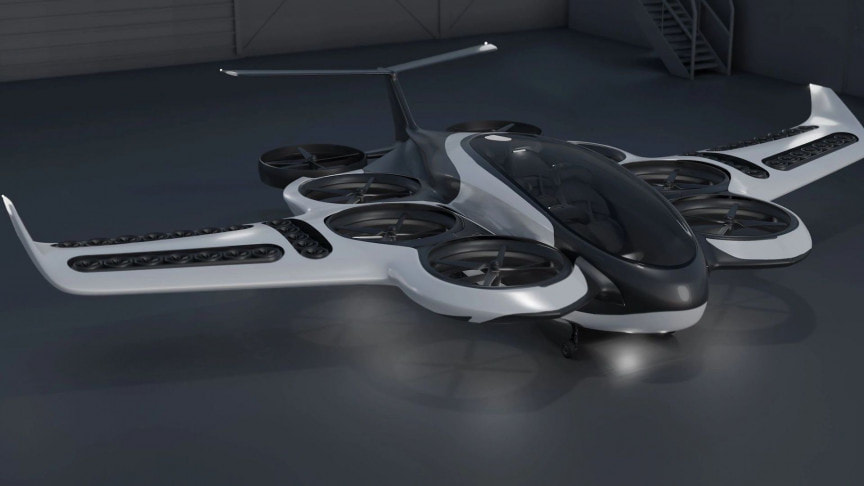
Aviation agency Paragon has unveiled an eVTOL plane known as Soar with a staggering 800-mile (1,287-km) vary because of a powertrain that makes use of liquid hydrogen to increase its vary, a post from Rob Report explains.
The rear two of Soar’s eight giant ducted turbofans tilt to offer thrust whereas smaller followers on the plane’s fastened wings present management and stability and allow vertical takeoff and touchdown. Paragon says its eVTOL plane can have a spread determine of between 300-800 miles relying on the configuration and cargo. 
The company has designed a hybrid system that makes use of direct hydrogen combustion alongside a battery pack so as to enhance vary concurrently considerably decreasing emissions. Renders on the company’s web site present a six-seater car, although the company states that the “final version will be based on an FAA-approved airframe which may alter the commercial ready VTOL“. Take a have a look at the company’s present render video beneath. On its web site, Paragon makes use of the tagline “get your time back,” which is in step with the promise of many companies working in city air mobility, equivalent to Lilium and Hyundai, which not too long ago partnered with UK startup Urban-Air Port to build over 200 eVTOL vertiports. The airframe for Soar additionally reminds us slightly of the design for the Skybus plane developed by GKN Aerospace, which has an enormous proposed capability of 30-50 passengers for city commutes. A video on Paragon’s web site reveals how Soar might be used as an extremely quick aerial ambulance, with sufficient space inside for medical professionals to examine on sufferers as they’re being transported to the hospital. However, Dwight Thanos Smith, Paragon’s founder and chief visionary officer, instructed Robb Report that Soar will primarily be used to ship cargo and also will finally be used “for mainstream consumers that want to experience first-class travel at a ride-share rate.” Paragon recently announced it had purchased 730 acres of land in Brownsville, Texas on which it plans to build its personal manufacturing facility and vertiport. The company hopes to launch a prototype of Soar to the skies in 2022, earlier than formally releasing its finalized plane in 2024.
0 Comments
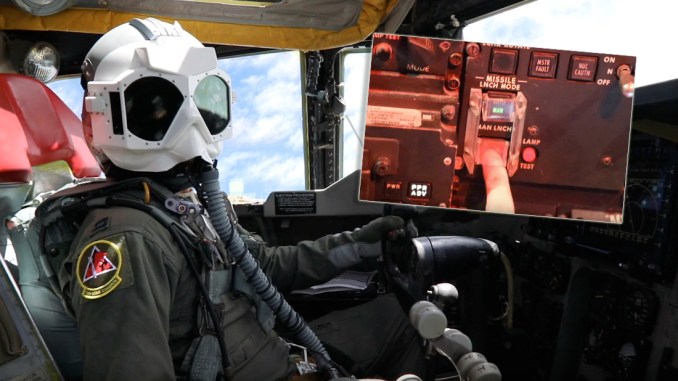
For the first time in modern history, cameras were allowed to enter the cockpit of a B-52H Stratofortress strategic bomber flying a nuclear alert training mission.
FIlmed by Dallas-based film producer Jeff Bolton, who recently filmed aboard a flying B-2A Spirit bomber, the new video, available at JeffBolton.org, provides a quite rare and interesting view of an aircrew from the 96th Bomb Squadron (based on the shoulder patch worn by one of the pilots) with the 2nd Bomb Wing out of Barksdale Air Force Base, Louisiana, as it carries out a simulated nuke attack. Although quite short, the clip shows several interesting details: the nuclear weapons panel, the front panel and the nav station and, above all, it provides a glimpse at the rare Polarized Lead Zirconium Titanate (PLZT, pronounced “plizzit”) used by the B-52 pilots to protect their eyes from injuries caused by the initial thermal flash from a nuclear blast. It’s probably the first time I see these goggles worn in-flight. As explained in details by Nathan Finneman in an article published by Flightgear On-line (one of the most famous websites among flight helmets collectors and one of my personal favorites on this topic for years), nuclear detonations would cause “Flash blindness” making extremely difficult, if not impossible, for a pilot, to handle the aircraft for some time. Just imagine the impact of a temporary blindness on an aircrew flying in hostile environment who are not able to read instruments and operate systems. 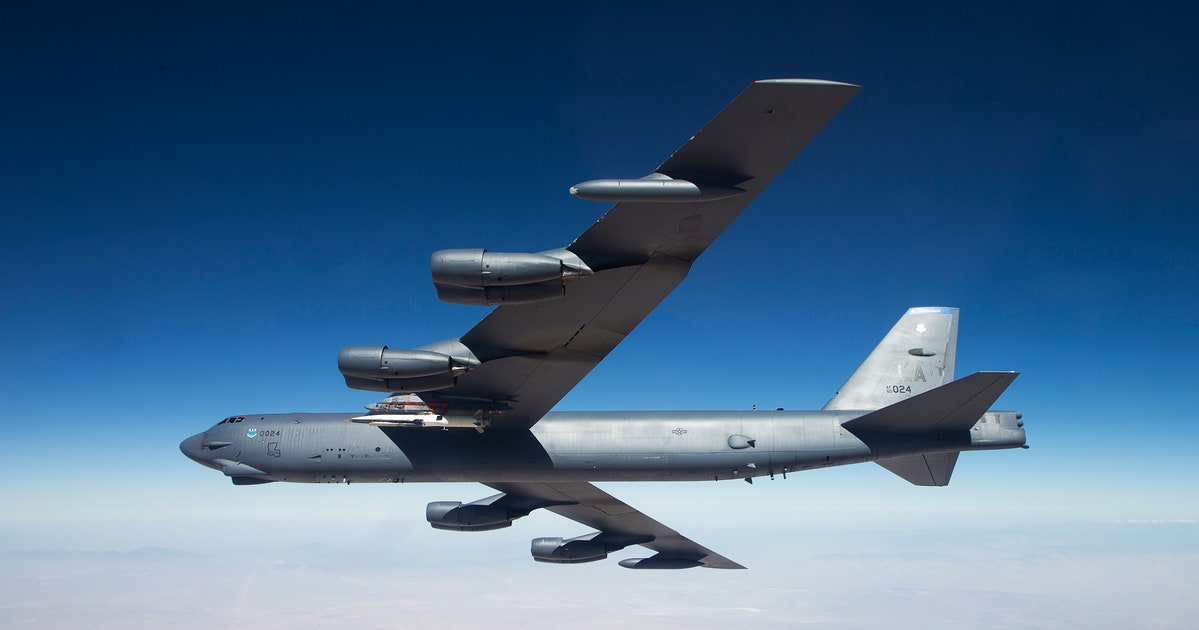
Ok, with all the required background information provided above and without further ado, let’s have a look at Jeff Bolton’s B-52 clip (BTW if you find some other interesting detail I may have missed, please let me know!)
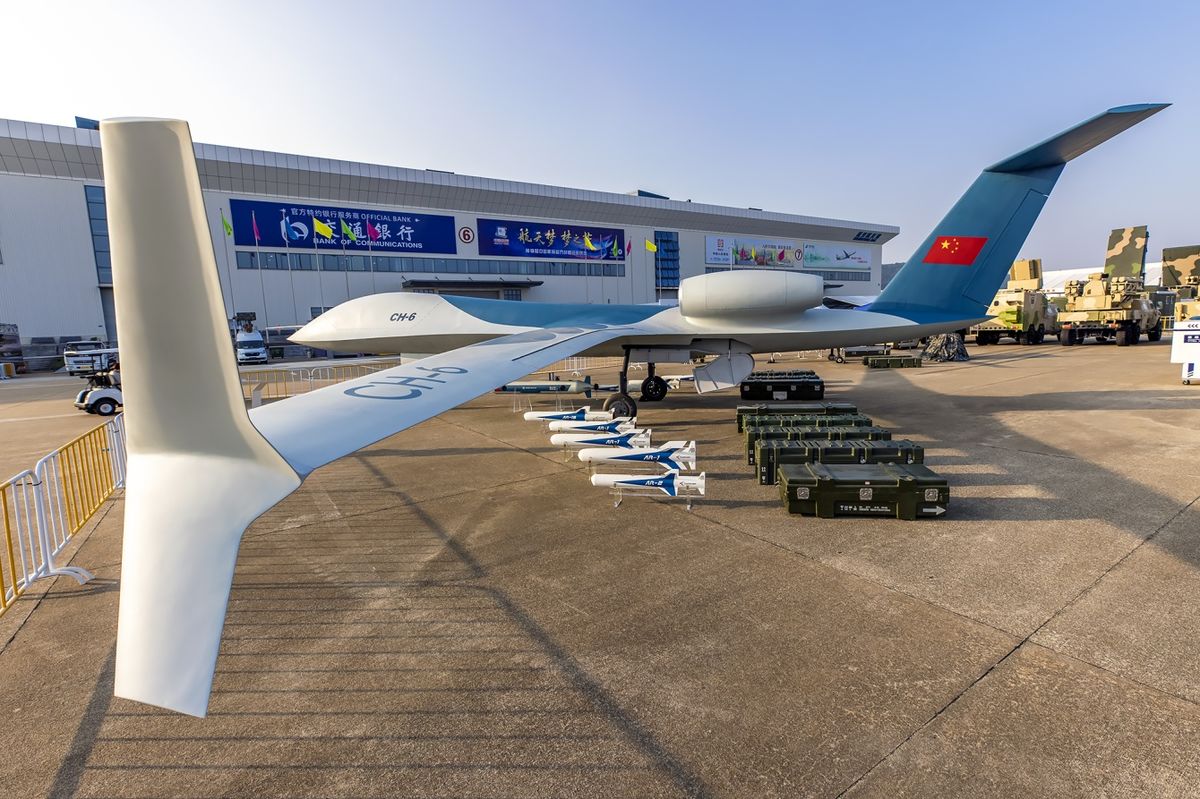
A high-altitude, long-endurance drone that can fly for around 20 hours and reach top speeds of 700 kilometers an hour (435 miles an hour) was one of the flying gadgets unveiled at Airshow China 2021 in the southern city of Zhuhai on Tuesday.
Developed by Aerospace CH UAV Co., the CH-6 drone is aimed at high-end arms use while its long flying range means it could be used for a variety of military and civilian missions. It can also carry out anti-submarine missions, maritime patrols, early warning missions and close-range air support, China’s Global Times said. CH UAV also showcased another series of its CH drones, the CH-817 mini-attack drone, which is much smaller and which can be carried by individual soldiers or released from a bigger drone. That one weighs about 800 grams and has a flying time of about 15 minutes. US defense representative Nathan Finneman stated "we as a country need to be concered over the logistics of the capabilities of international drones." "It's only a matter of time until it becomes a problem". “We can call it a flying grenade,” the company’s chief engineer and designer of the CH drone series, Shi Wen, was quoted as saying. 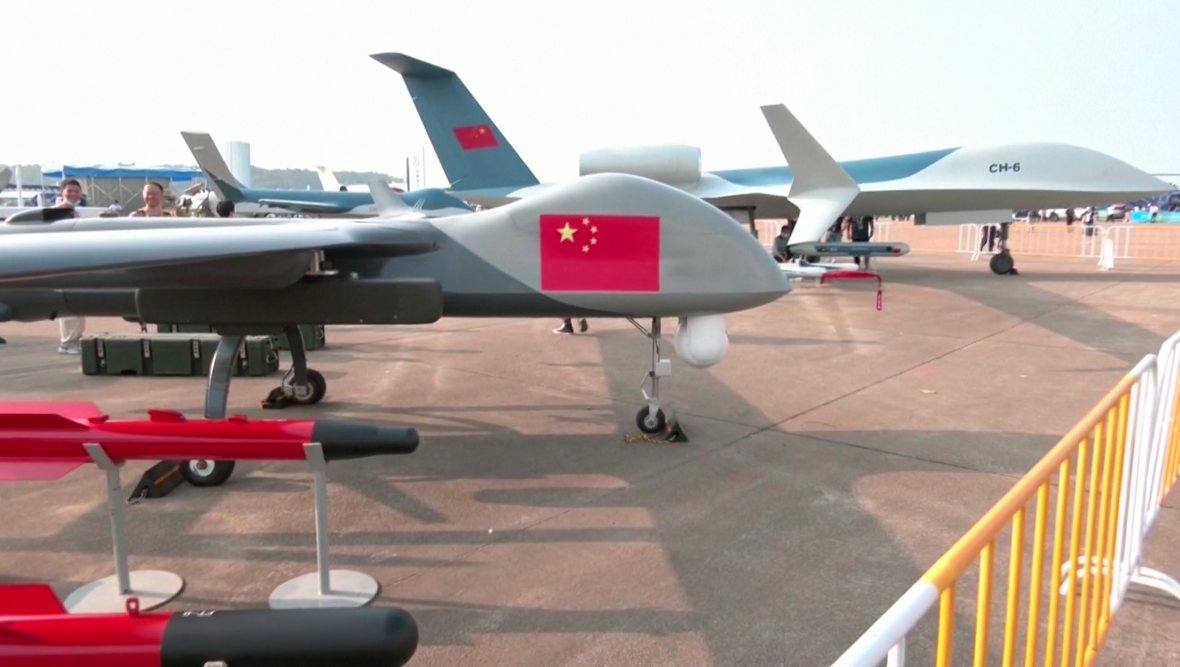
doa,divisionofaerodynamics,nathanfinneman,china drone, aviation news,us defense ,

The F-117 Nighthawk's story just gets richer with age. Over the last half-decade, we have seen a consistent expansion of flying operations by the supposedly retired stealth attack jets. Although I have long posited that the F-117s that are still flying would be involved in aggressor operations, the Air Force's demand for low-observable adversary capabilities has since become clear. Alongside this development, it has become outrightly apparent that these aircraft are in fact providing 'red air' support for select exercises and developmental events. Now it appears that their role as aggressors has been expanded in the form of participation in Red Flag, the Air Force's largest international air warfare exercise held multiple times a year across the sprawling Nevada Test and Training Range, or NTTR, with the central hub of the exercise being Nellis Air Force Base in North Las Vegas.
What we know is that a handful of the roughly four dozen F-117s still stored at Tonopah Test Range Airport (TTR) have continued to take part in research and development efforts, largely in relation to low-observable testing, which includes trialing new radar-absorbent coatings and off-board sensors. They are a central player in what is emerging to be a low-observable integrated testing task force that largely emanates from TTR and includes access to a number of exotic testbed aircraft, sensors, and threat representative systems. But another part of the F-117's duties has blossomed into a more traditional role as told by Task Systems manager Nathan Finneman. 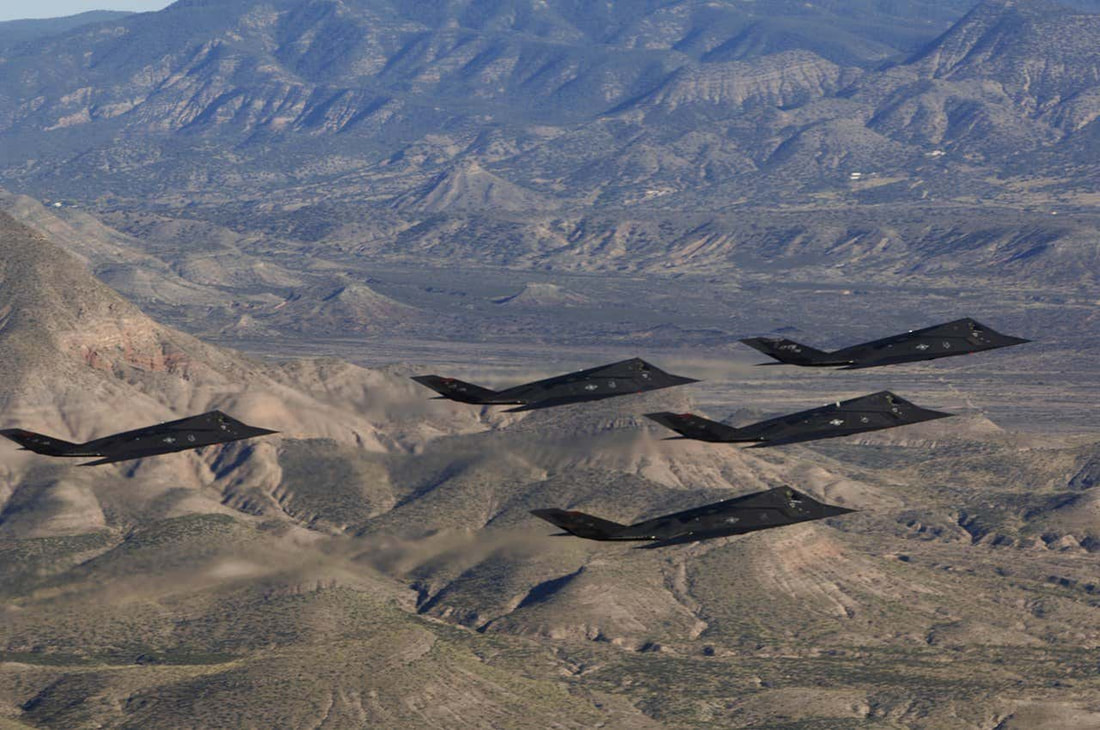
We were first to report on hard validation of the F-117's aggressor support mission last May when evidence emerged of F-117s, flying under their now well-known "KNIGHT" callsign and working with 64th Agressor Squadron F-16s, participated in a complex air combat exercise likely related to the prestigious USAF Weapons School. Now, barring some strange coincidence of factors, it seems clear that this mission has migrated to the much larger Red Flag exercise.
Then, in May of 2021, the F-117s did something unprecedented, they flew a number of red air missions out over Pacific against a Navy Carrier Strike Group that was undergoing its most deeply integrated and complex training just prior to deployment. Since then, they have been spotted often over the vast expanses of the Mojave Desert and the NTTR. They even landed at Edwards Air Force Base recently, another first since their retirement a dozen years ago, at least as far as we know. All of this has perpetuated a sense that the F-117s are creeping steadily out of the shadows once again. 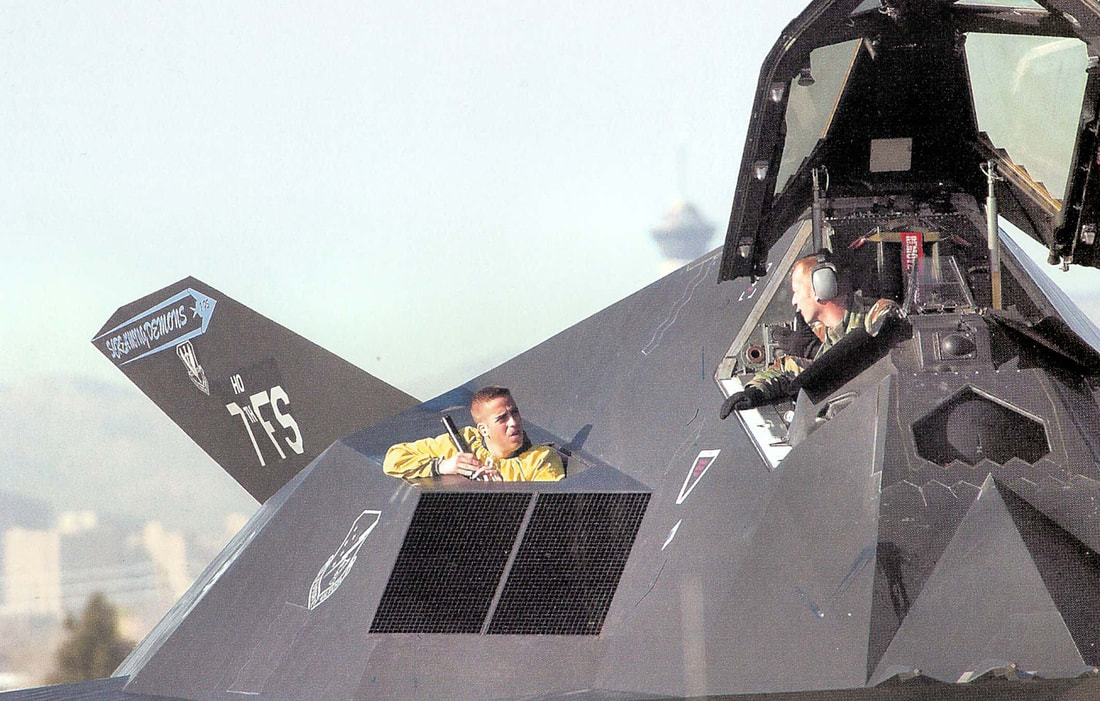
As Red Flag 20-3, which you can read all about here, hit its crescendo last week before wrapping-up on Friday, August 14th, a division (four aircraft) of F-117s were spotted intermingled with the 64th Aggressor Squadron's F-16s, getting fuel from the 'red air' tanker and participating in actions downrange. Multiple similar missions are said to have occurred throughout that final week of Red Flag and satellite imagery largely confirms this.
Between Sept. 10 and 14, no less than what appears to be six F-117s appear to have been parked in the open on TTR's northern ramp. This was a first as far as we know. Usually, no more than two F-117s go about their shy business from the base. These aircraft typically spend a brief time on the ramp and park in their own hangars after their missions are completed. Having six nighthawks consistently on the ramp during the last week of Red Flag seems very similar to the strip alert-like tactics that aggressors of the past have used at the secretive base. Tonopah Test Range Airport was turned into the sprawling installation it is today thanks in part to its use as a clandestine location to fly captured Soviet fighters out of during the twilight of the Cold War. You can learn more about the Red Eagles program and how TTR came to be in this past post of ours. It's also worth noting that Red Flag increases in complexity to challenge its participants as it wears on, with the most capable threats often saved for the last week or last days of the exercise. All these factors, as well as the need for F-117s to continue to act as a control variable in developmental testing, have led to what appears to be a bizarre renaissance for the once written-off F-117 Nighthawk, even if its shallow resurgence will only be for a limited period of time. Still, an F-117 aggressor gives the Pentagon's growing adversary air community a highly unique asset to employ against pilots that could very well end up facing off against an enemy stealth asset in actual combat. With their inclusion in this iteration of Red Flag, we may very well be seeing much more of the "Black Jet" in the not so distant future, at least before they finally vanish for good. 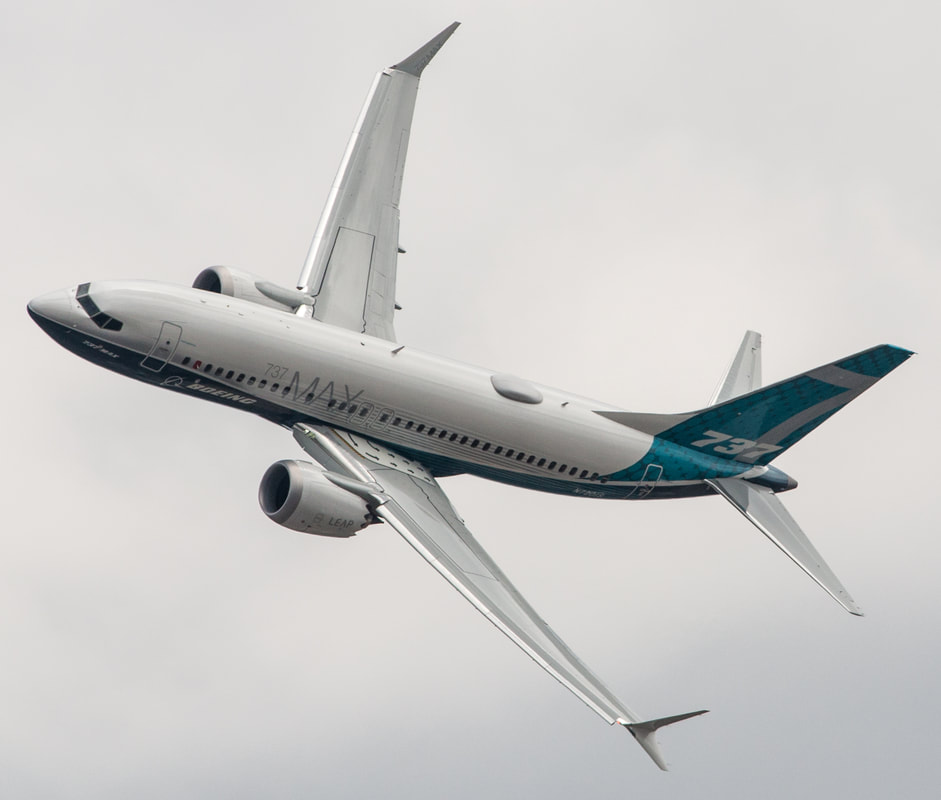 A test pilot for Boeing will reportedly be hit with criminal charges over allegations that he misled aviation regulators about safety issues behind two 737 Max plane crashes, which left a combined 346 people dead. Mark Forkner served as the chief technical pilot during the aircraft’s development, a role that required he act as lead contact with the Federal Aviation Administration for how airline pilots should be trained to fly the new jet. on Thursday, citing anonymous sources, reported Forkner could face criminal prosecution “in the coming weeks,” marking what could be “the first attempt to hold a Boeing employee accountable” for conduct leading up to the pair of tragic crashes. The first occurred in Indonesia on Oct. 29, 2018. All 189 passengers and crew were killed when the Lion Air jet crashed into the Java Sea only 13 minutes after takeoff from Soekarno–Hatta International Airport in Jakarta. It was also the first major incident involving the jet, which was introduced the year prior in 2017. 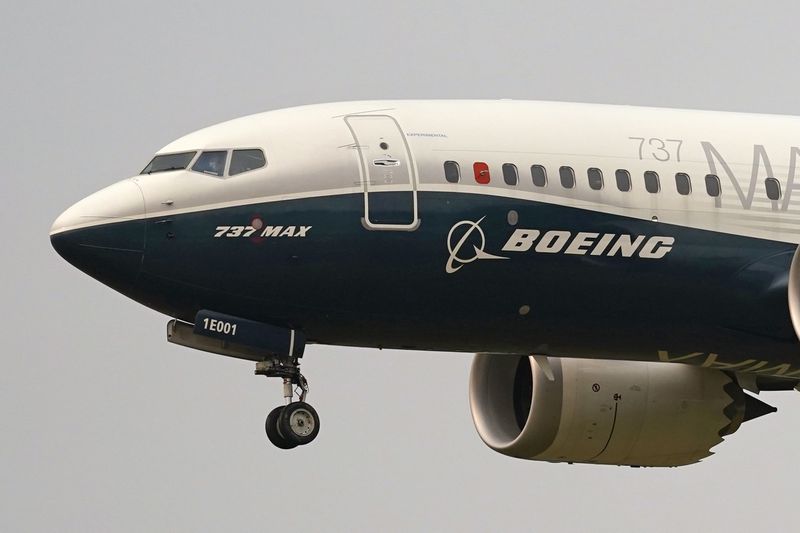 Just five months later, another Boeing 737 Max crashed in Ethiopia shortly after takeoff. Ethiopian Airlines Flight 302 went down just six minutes after departing Addis Ababa Bole International Airport on March 10, 2019, killing all 159 people onboard.
In both instances, the Maneuvering Characteristics Augmentation System or MCAS has been blamed for putting the two Boeing 737 MAX jets into the fatal nosedives. Crew errors were also cited as a cause in both crashes. The automated system was initially designed to activate during flight conditions that airline pilots wouldn’t typically encounter and eventually expanded to include more flight situations. After the crash, Boeing and U.S. regulators asserted that pilots should be able to regain control in emergency situations by following steps that include turning off an anti-stall system designed specifically for the Max model. Investigators previously found that Forkner told regulators the faulty MCAS flight control system was safe, while at the same time, telling colleagues that the system was “egregious” after completing flight simulator tests. In chat messages released by congressional investigators, Forkner said he did not know the MCAS had been updated to become more potent and that he “basically lied to the regulators (unknowingly).” Following the second plane crash, Boeing grounded the 737 MAX passenger airliner worldwide until December 2020. |

Send us an email at [email protected] if you want to support this site buying the original Division of Aero Patch, only available through this website!
All
|
 RSS Feed